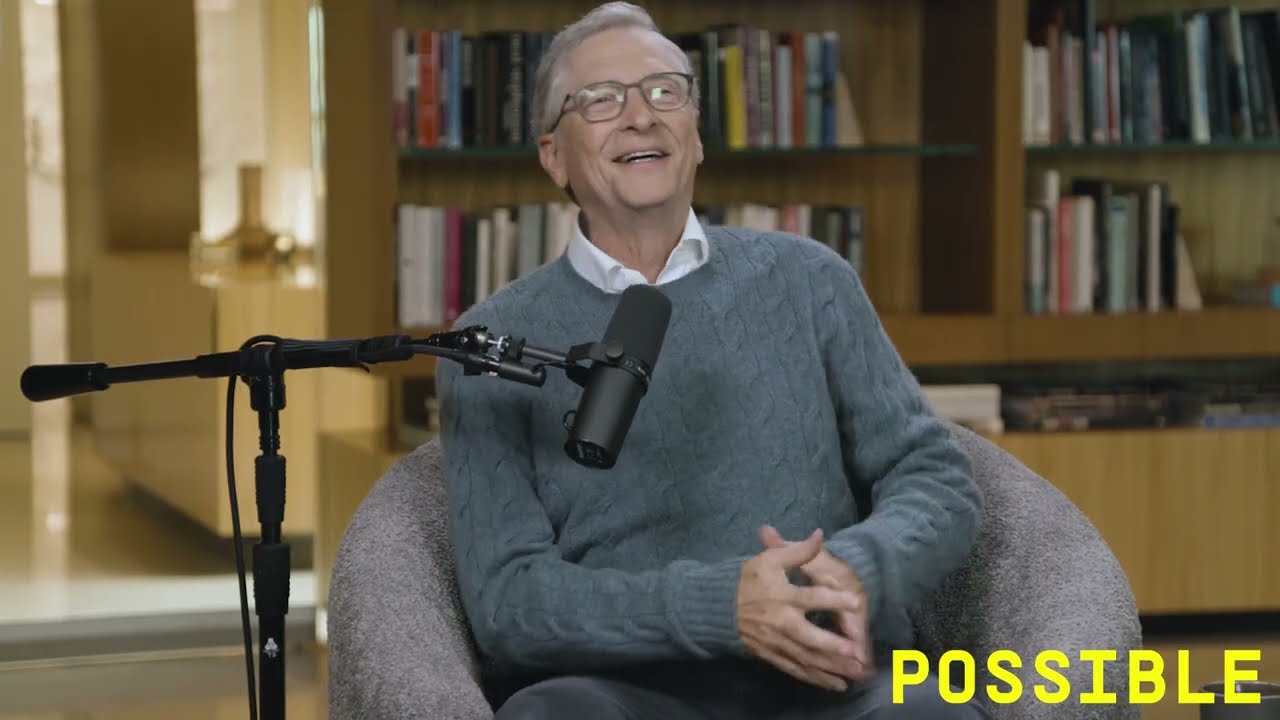
Technology / Microsoft · Gates Foundation
Bill Gates.
THE PERSON BEHIND THE WORK
Bill Gates co-founded Microsoft during the emergence of personal computing, then devoted more of his work to philanthropy and the public discussion of ideas.
THE ESSENTIALS
- Full name
- William Henry Gates III
- Public name
- Bill Gates
- Date of birth
- 28 October 1955
- Place of birth
- Seattle, Washington, United States
- Origin / upbringing
- American of English, German and Irish/Scots-Irish ancestry; grew up in Seattle, Washington, United States
- Current residence
- Medina, Washington, United States (publicly listed by Forbes)
- Business
- Microsoft · Gates Foundation
- Background
- Microsoft co-founder and Gates Foundation chair
Biographical references: Gates Notes · Biographical reference · Forbes residence listing
Explore the chapters8 CHAPTERS +
Recognizing software as a business in its own right
In 1975, Bill Gates and Paul Allen founded Microsoft as the market for personal computers was taking shape. Their early work included software for the Altair 8800. By producing programs for machines made by other companies, they built an entrepreneurial proposition around software itself rather than the manufacture of the hardware running it.
The spread of personal computers increased the importance of operating systems and applications. Microsoft's products could connect with hardware supplied by other manufacturers, placing the business within a developing market. Gates's early career combined his engagement with programming and software with the commercial and organizational responsibilities of building a company around those capabilities.
Products that became part of everyday computer use
Windows and Office became closely identified with Microsoft's place in personal computing. Operating systems and productivity applications connected the company to the tasks individuals and organizations carried out on computers. Their role in work and everyday use supplies a concrete product background to the business associated with Gates.
At Microsoft, Gates held executive responsibilities as well as technical leadership roles. Product development depended on licensing, partnerships and support for an expanding user base. His founder story consequently includes the organizational work of bringing software to market alongside the creation of the software itself.
A shift toward philanthropic work
Gates left Microsoft's daily responsibilities in 2008 to give more time to philanthropy. The foundation describes global health and development as central priorities. Its grants and partnerships connect it with organizations working on health, education and problems associated with poverty.
Establishing and operating a software company is a different undertaking from this later institutional role. The foundation has programmes and leadership of its own, while Gates brings resources and public recognition from his previous career. The connection between these settings is the changing focus of his work across time.
Sources [1]

A direct channel for writing and recommendations
Gates Notes provides a personal space for essays, reading recommendations and discussion of subjects including health, energy and technology. It allows an audience to encounter his interests through his own writing alongside the communications produced by Microsoft and the foundation. The platform adds another route into his public work.
This writing brings public explanation into a profile already shaped by software and philanthropy. Each activity has a different purpose and organizational setting. Gates Notes allows him to communicate ideas directly to readers, extending the relationship beyond the institutions most closely associated with his business career and charitable work.
Microsoft within the wider personal computing story
Microsoft is the organizational starting point for Gates's entrepreneurial biography. Its history places him beside Paul Allen at the creation of a software company during the development of personal computing. Programs made hardware useful for practical tasks, connecting Microsoft's products to the arrival of computers in homes and workplaces. Gates's role therefore belongs to an industry story as well as a company history. The documented founding chapter and the products that followed explain the substance behind the public association between his name and computing.
An operating system provides the environment in which other programs run and people interact with a machine. Microsoft's historical position in this product category helps explain its relationship with ordinary computer use. Productivity applications add tools for the work performed within that environment. Separating these categories gives the business account greater precision: Gates helped establish a company selling software that addressed several connected aspects of using a computer. The opportunity involved more than an abstract interest in technology; it concerned products with defined functions for customers.
Paul Allen's place in the founding story also matters. A business often associated with one particularly visible individual began through a partnership. As the company developed, engineering, product development and operations depended on many people's work. Keeping those organizational contributions in view gives Gates's personal role its proper context. The company supplied the setting in which software was developed and brought to customers, while the individual biography follows one founder through that wider history.
A different institution and a different purpose
The Gates Foundation introduces another organizational chapter. Its account of leadership identifies Gates's philanthropic association and sets out the areas in which it works. Allocating resources toward stated public goals creates a different relationship with projects and partners from selling programs to software customers. Gates's career spans both settings, but each has its own responsibilities. Distinguishing them makes the progression understandable and keeps the foundation's activities from being treated as another division of Microsoft or as the same commercial business continued under a different name.
The institution also gives philanthropy a structure beyond an individual's public interest in an issue. Programmes, partnerships and decisions about resources are organized within the foundation, whose leadership account places Gates inside that framework. That material establishes his stated role and the organization's description of its work. The results of particular initiatives require evidence specific to those initiatives. Keeping a person's institutional association separate from programme outcomes allows the philanthropic chapter to be described clearly without assigning unverified results to it.
Both parts of the career involve large organizations and problems of substantial scope, although their purposes differ. Microsoft developed software for sale; the foundation organizes work around charitable priorities. Gates's biography follows the movement from the company he co-founded into this further field of activity. That progression explains why accounts of his work often bring technology, philanthropy and public discussion together. Each remains rooted in a particular setting and engages with people through a different form of relationship.
Sources [1]
What the personal writing adds
Personal publishing gives Gates a relationship with readers alongside his institutional roles. Essays and book recommendations let him explain subjects in his own voice and describe why particular questions interest him. People can encounter that writing without buying Microsoft products or taking part in a foundation programme. It therefore introduces a separate audience into the biography. The writing makes selected interests visible, while organizational accounts remain more direct evidence for the companies and institutions with which his career is associated.
Reading recommendations have a particular place in that public presentation. They introduce work by other authors and invite readers to explore the ideas for themselves. This gives the account a dimension beyond positions held and business milestones reached. It shows which topics Gates chooses to discuss and how he brings them to an audience. Alongside the software company's history and the foundation's leadership account, the writing offers a complementary perspective on the professional life documented here.

Reading each part of the record in context
The available accounts serve different purposes. A company describes its corporate history; a foundation explains its leadership and priorities; personal essays communicate their author's chosen subjects. Each is most informative within that scope. A historical account can establish a founding milestone, an institutional biography can identify a role, and a piece of writing can reveal an interest. Considered together, they support a fuller biography while keeping the evidence connected to what it actually covers. The result is a career traced through identifiable organizations and a personal publishing activity, with public recognition supported by a concrete professional sequence.
Sources [1]
THE REFERENCE DESK
Go to the
source.
Explore the company records, first-person accounts and reporting behind this biography. Numbered references connect each chapter to its source material.
- Gates FoundationBill Gates — foundation leadership biography
- MicrosoftMicrosoft turns 50
- Bill GatesGates Notes — essays and reading
CONTINUE THE RESEARCH
In their
own words.
THE VISUAL RECORD
A closer look at
Bill Gates.
3 photographs
Moments beyond the words.