Consumer Brands / Dyson
James Dyson.
THE PERSON BEHIND THE WORK
James Dyson built a product company around practical invention, taking repeated engineering experiments into bagless vacuum cleaners and a wider range of consumer machines.
THE ESSENTIALS
- Full name
- James Dyson
- Public name
- James Dyson
- Date of birth
- 2 May 1947
- Place of birth
- Cromer, England, United Kingdom
- Origin / upbringing
- Grew up in Norfolk, England, United Kingdom
- Current residence
- Gloucestershire, United Kingdom (county; city not publicly confirmed) (publicly listed by Forbes)
- Business
- Dyson
- Background
- Dyson founder and chairman
Biographical references: Dyson · Biographical reference · Forbes residence listing
Explore the chapters8 CHAPTERS +
Investigating familiar objects through design
James Dyson studied at the Royal College of Art before developing his work as a product designer and inventor. The Ballbarrow was among his early projects, replacing the conventional wheelbarrow wheel with a ball. It reflects an interest in the mechanics of ordinary equipment and in how a design change could affect practical use.
His vacuum-cleaner development investigated cyclonic separation as a way to maintain suction. The company account records 5,127 prototypes over five years. Repeated testing and adjustment form the substance of that figure: a technical problem was revisited until the proposed mechanism could become part of a working machine.
The customer product and the process behind it illuminate different parts of the story. One concerns a machine for a familiar household task; the other concerns the engineering investigation that preceded it. Dyson's work connects experimentation to a later commercial undertaking, making the everyday product the outcome of both technical development and organization.
Turning a mechanism into a supplied product
Launched in 1993, the DC01 was the first vacuum cleaner carrying the Dyson brand. Its identity centered on the bagless mechanism, but reaching homes required more than invention. Manufacturing, distribution and customer support had to be organized around the design, connecting company-building with the technical work.
Dyson later introduced products in fans, air treatment and hair care. Its history presents them through an engineering approach to everyday problems, and company material identifies James Dyson as founder and chairman. The biography therefore follows both invention and the organization required to bring a wider product range to customers.
Sources [1]
Creating further opportunities for engineering
The James Dyson Foundation was established in 2002 and supports engineering education, medical research and local communities. The James Dyson Award also appears in this educational work as recognition for young inventors. These initiatives add support for future engineering alongside the company's commercial products.
Experimentation serves a different purpose in education. A student project can produce learning through investigation, while a consumer machine needs a business to manufacture and support it. Practical problem solving connects these settings: developing proposals, testing them and making engineering accessible through things encountered in daily life.
Sources [3]
A design education concerned with mechanics
In an account of his art-school years, Dyson describes moving from furniture toward interior design and becoming interested in mechanics and structures. His final-year project was a fast, flat-hulled fibreglass landing craft, developed with industrial mentor Jeremy Fry. Testing prototypes took the design beyond the studio into practical experiments.
This history gives the vacuum cleaner a wider context. A boat, wheelbarrow and cleaning machine raise different questions, but each allows a problem to be observed and a proposed change tested. The best-known invention belongs within a broader career concerned with useful equipment, supplying continuity across products that otherwise seem far apart.
Sources [2]
The work between a prototype and a customer
Dyson distinguishes developing cyclonic separation from the later task of selling a machine based on it. A finished product design, manufacturing and a route to buyers all had to accompany the mechanism. The DC01 brought these elements together under the Dyson name in 1993.
This commercial stage extends the prototype story. Experiments investigate what a design can do; a business makes it available and supports its use. Dyson's professional account combines these responsibilities, connecting technical persistence to an organization able to supply the result as a consumer product.
Sources [1]
Several practical routes into the discipline
The Foundation, James Dyson Award and Dyson Institute provide identifiable forms for the educational strand. Their settings range from student invention to study combined with work in an engineering environment. They approach technical development in different ways while sharing an interest in practical experience.
Each gives people opportunities to investigate, build or refine ideas. This connects the processes underlying Dyson's products with opportunities for others to develop problem-solving skills. Educational work sits alongside the company's distinct commercial responsibilities, adding support for future engineers to the broader account.
Sources [3]
From the workings of an object to its use
The Ballbarrow and vacuum-cleaner work both begin with familiar equipment. Because people already understand the task a wheelbarrow or vacuum performs, a proposed design change can be considered through everyday use. Company and educational accounts place practical testing within this development. The entrepreneurial idea starts with how an object works and passes through experiments toward something a customer can use. A commercial organization becomes necessary when the mechanism requires manufacture, a finished design and a route into that customer's hands.
The landing-craft project provides an earlier example of the same connection. Developed with Jeremy Fry, the proposal was tested outside the studio against conditions in which it would operate. The named mentor and specific object make Dyson's education concrete, showing how study, professional guidance and experiments with physical things met in a project. Later products can be understood alongside that beginning. Across the different settings, design thinking remains connected to the experience of testing what has actually been built.
Cyclonic separation supplies the vacuum chapter's particular mechanism. The company's history follows its application in a consumer machine, with the DC01 marking its appearance under the Dyson brand. This milestone connects invention with the wider responsibilities of a manufacturer. A customer encounters the complete product, while the organization must support production and supply. Dyson's association therefore spans both a technical principle and the company developed around its practical use.
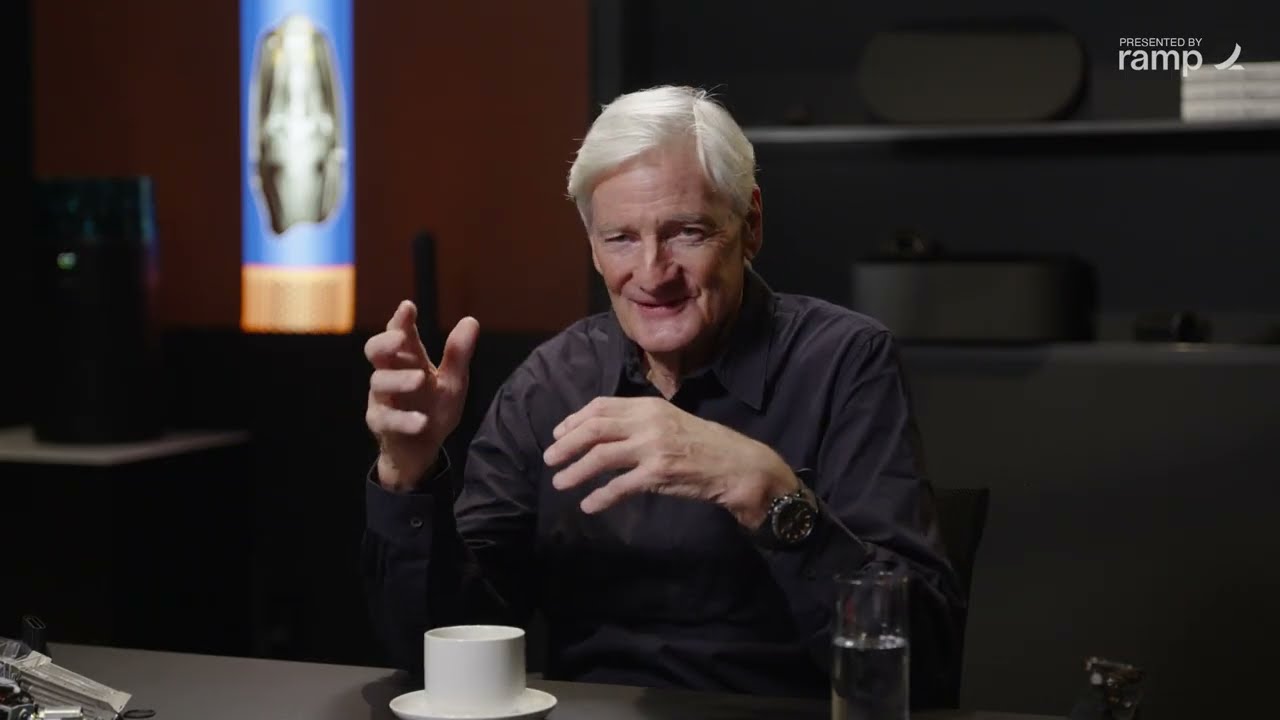
The educational extension of practical invention
The Foundation, Award and Institute each create a different setting for learning. Engineering education introduces investigation and building; recognition gives a student invention a public reference; study within an engineering environment offers another form of practical exposure. The initiatives share a subject without being interchangeable. Their separate identities give the educational chapter definition beside the consumer products and business organization more familiar to customers.
This work also relates to Dyson's earlier experience of mentorship and projects. His own development involved learning by making and working with another professional. Later initiatives provide further settings in which others can explore engineering. The connection is a continuity of practical experience, while each programme retains its own activities and audience. Together they widen the biography from making consumer equipment to supporting people who may develop future products.
Design, testing and organization remain connected throughout the sequence. A prototype explores a possibility; a finished machine brings it into use; a business supports manufacture and delivery. Educational initiatives add opportunities for other people to investigate related questions. This gives the profile a practical structure grounded in documented projects and institutions.
Named objects, experiments and institutions keep the inventor's history concrete, connecting the personal account to identifiable work across its educational and commercial chapters.
THE REFERENCE DESK
Go to the
source.
Explore the company records, first-person accounts and reporting behind this biography. Numbered references connect each chapter to its source material.
- Royal College of ArtJames Dyson
CONTINUE THE RESEARCH
In their
own words.
THE VISUAL RECORD
A closer look at
James Dyson.
3 photographs
Moments beyond the words.