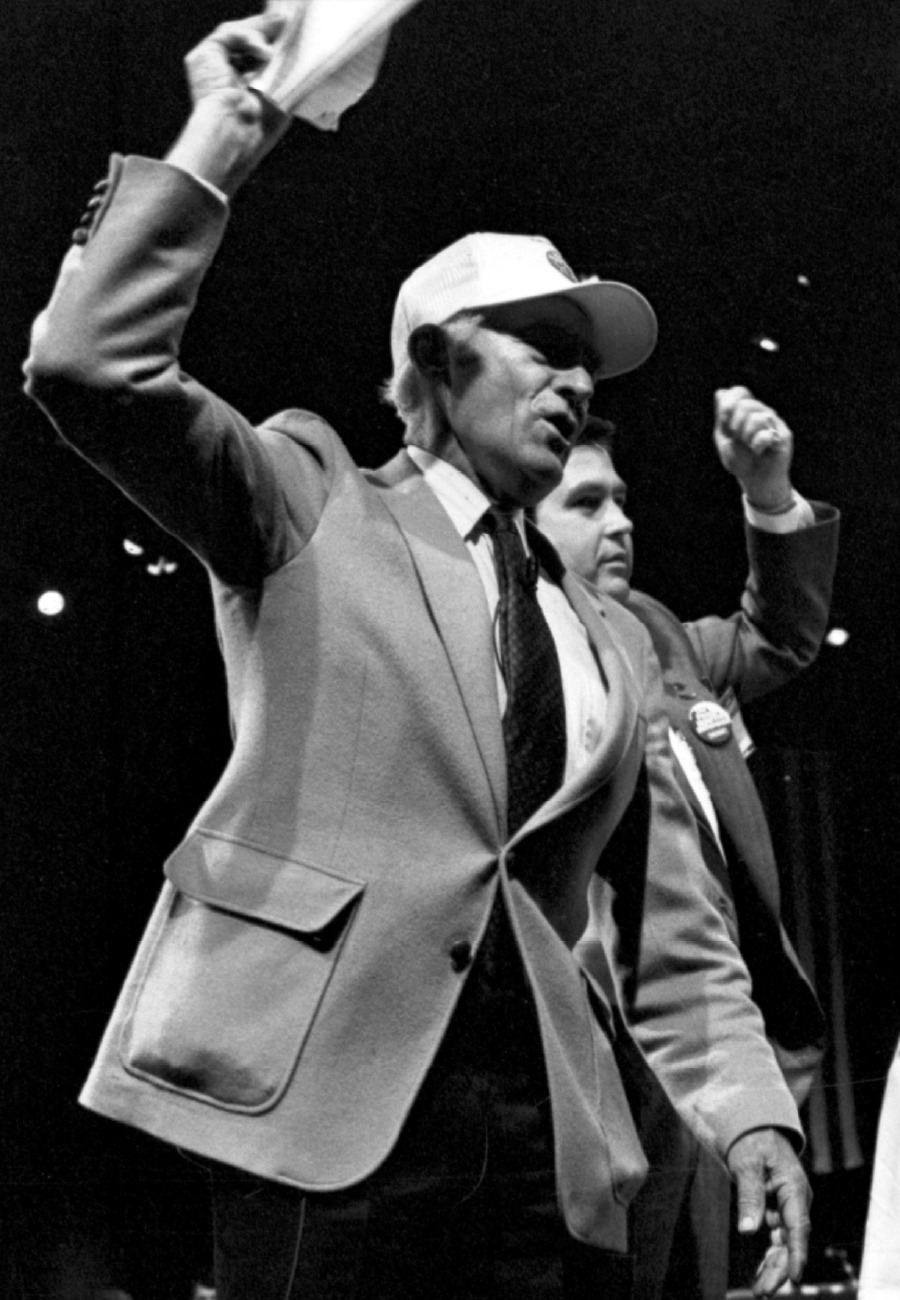
Consumer Brands / Walmart · Sam's Club
Sam Walton.
THE PERSON BEHIND THE WORK
Sam Walton developed practical store experience into Walmart and Sam's Club, connecting customer value to purchasing, people and the organization of distribution.
THE ESSENTIALS
- Full name
- Samuel Moore Walton
- Public name
- Sam Walton
- Date of birth
- 29 March 1918
- Place of birth
- Kingfisher, Oklahoma, United States
- Origin / upbringing
- Childhood in Oklahoma and Missouri, United States
- Current residence
- Not applicable (1918–1992)
- Business
- Walmart · Sam's Club
- Background
- Walmart and Sam's Club founder
Biographical references: Walmart company history · Biographical reference
Explore the chapters7 CHAPTERS +
Retail knowledge acquired through running shops
Sam Walton worked in variety stores before the Walmart business emerged. The company history records Walton's 5&10 opening in Bentonville, Arkansas in 1950. Merchandise choices, customers and a shop's everyday demands gave the later founder a practical background in retail.
This experience preceded his emphasis on price and value. The basic sale was familiar, while Walton explored how the offer could become a stronger reason to choose his stores. Knowledge of daily operations supplied a foundation for the next business stage.
The first Walmart and the work behind its prices
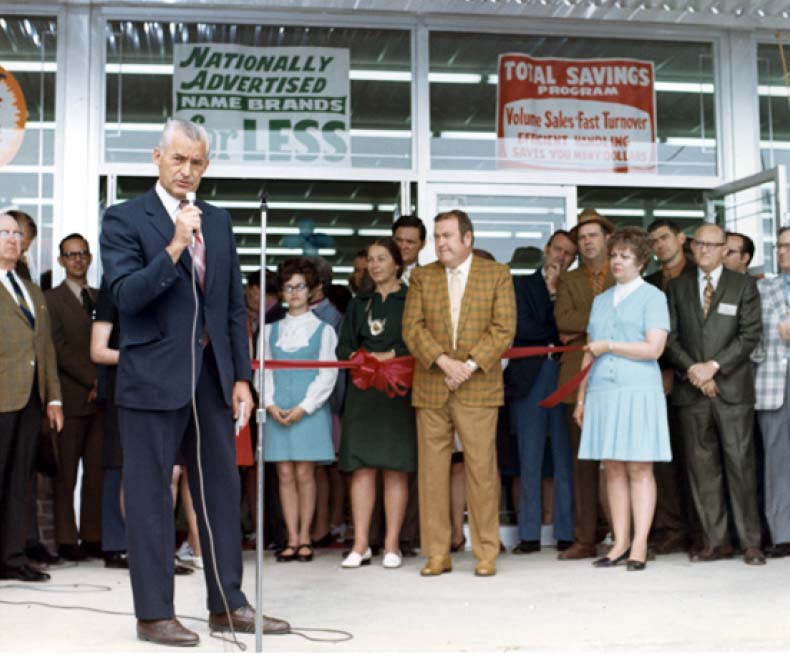
Walton opened the first Walmart in Rogers, Arkansas in 1962. The discount model combined lower prices with attention to local needs. That shop became the beginning of a business organized around value in its everyday offering.
Expansion meant connecting inventory, purchasing, store management and distribution. Each added location required supporting operations, people and systems. The visible stores and the network supplying them consequently developed together rather than as separate parts of the customer proposition.
Public trading and a membership warehouse
Walmart became publicly traded in 1970 as it continued to develop stores and distribution. Walton opened the first Sam's Club in Midwest City, Oklahoma in 1983. The warehouse introduced a membership-based format alongside the existing Walmart retail network.
The formats approached shoppers differently while sharing an interest in value. Walton's entrepreneurial work therefore included developing the original organization and extending that concern into another operating model. Each created its own relationship with the people buying goods.
Sources [1]
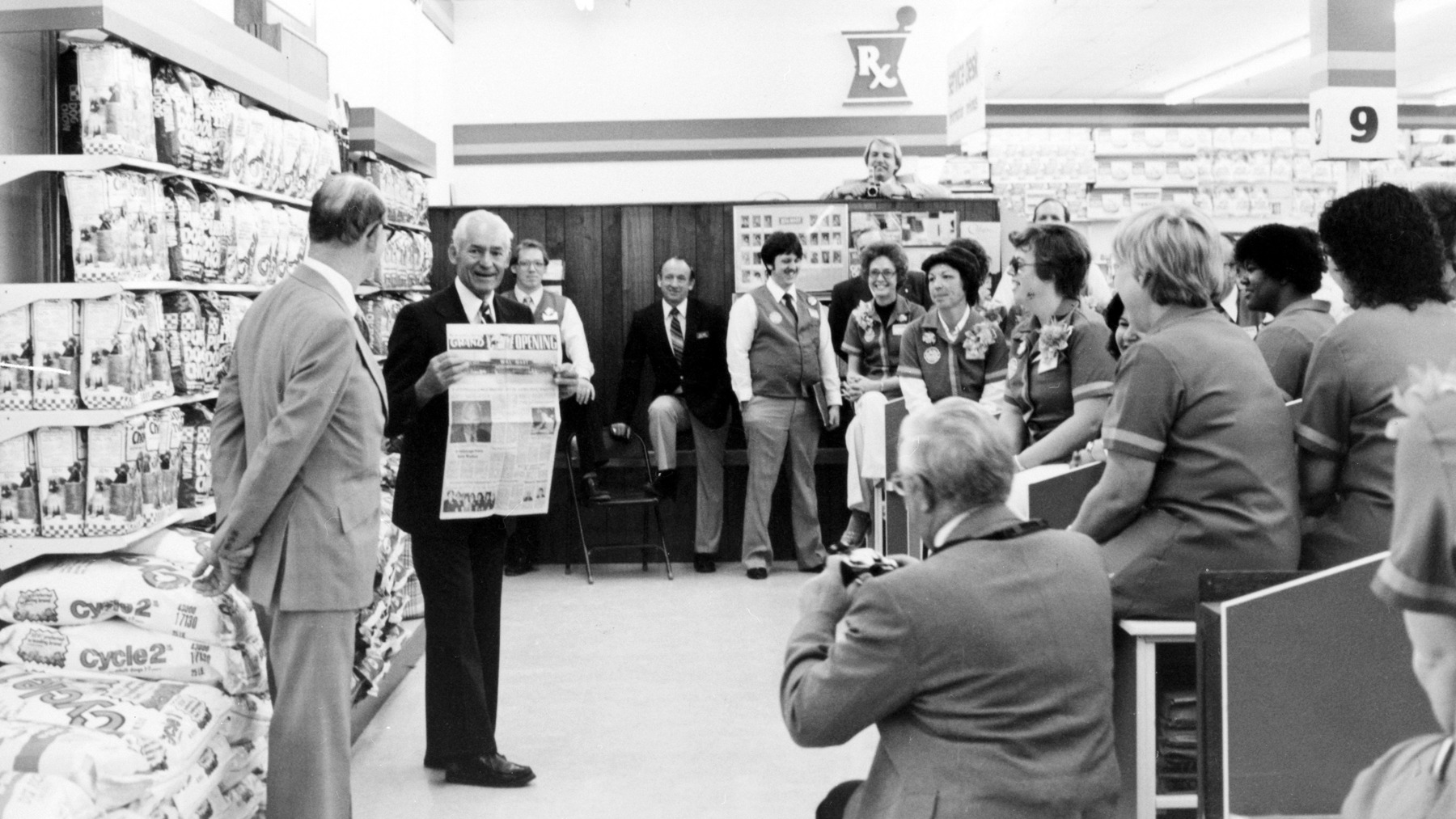
A public identity formed through the operating companies
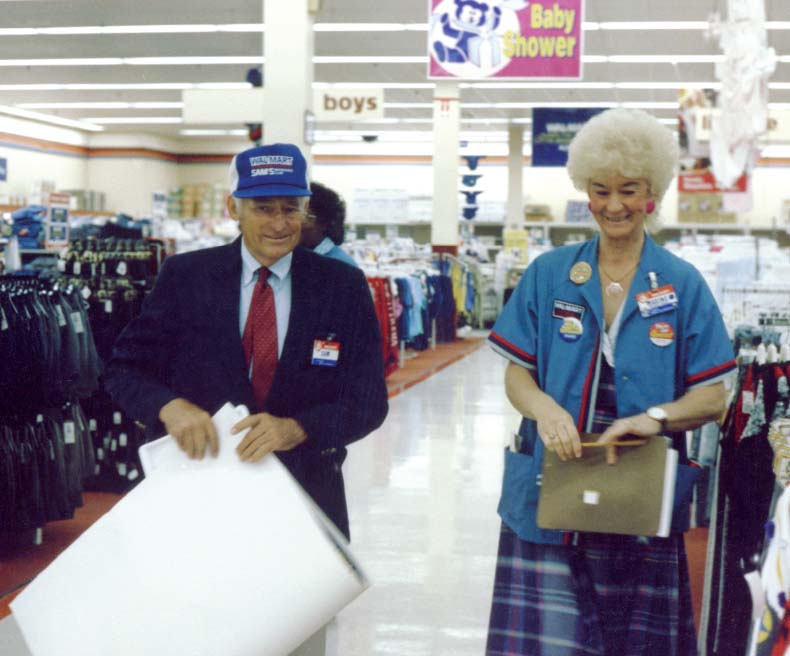
Walton's career preceded today's social-media founder culture. Stores, employees and the company provided the setting through which people encountered him. Walmart's account emphasizes attention to customers and to the people carrying out its work, locating the public identity inside a retail operation.
Walmart and Sam's Club developed teams, distribution and store networks of their own. Their histories connect the founder's legacy to customer priorities and operating principles. These organizations give that legacy an everyday practical setting rather than leaving it as an abstract reputation.
The earlier stores within the founding sequence
Variety retail placed Walton close to people purchasing ordinary goods. Merchandise needed to be chosen, kept available and presented in a useful shop. Bentonville supplies a named location for this earlier work. It gives the eventual Walmart chapter an operating foundation before a wider institution developed. The sequence begins with learning through stores and their daily responsibilities, not simply with the appearance of a familiar company name.
A price proposition depends on what happens behind a shelf. A retailer has to obtain goods, maintain availability and coordinate operating costs. The visible promise of value therefore connects directly to organizational work. The first Walmart served local shoppers; the subsequent network needed wider systems to support comparable practical experiences elsewhere. That relationship between proposition and delivery is a central business subject within Walton's biography.
Bentonville and Rogers identify distinct stages rather than interchangeable references to one beginning. Walton's 5&10 belongs to earlier experience, while Rogers marks the first Walmart. Preserving the difference keeps the chronology clear. The later business drew on work already done in retail, with merchandise and customer relationships continuing at the center of a much larger operating story.
What a network adds to the responsibilities of one shop
Multiple stores create tasks beyond those of one location. Goods move through distribution, stock information must be understood, and staff at each site carry out the service. Company history places these responsibilities within Walmart's development. The customer still experiences a practical local shop, while the organization behind it becomes coordinated across sites. This gives the founder association a substantial operational chapter.
Inventory illustrates the connection clearly. A product advertised or listed must be available when someone wants to buy it. Ordering and movement therefore affect the customer even where the visible experience is mainly a shelf and price. The retail model joins these elements. Value depends on purchasing, distribution and store management working together rather than on a message alone.
Public trading introduced another corporate relationship. The dated milestone is separate from the first shop and later warehouse format because it concerns the company's market setting rather than a shopping experience. Walton's history can consequently be followed at two levels: stores serving people and an institution changing over time. Founding provides continuity, while distinct events preserve the chronology of the larger organization.
Another format and the continuing operating principle
Sam's Club placed a membership-based warehouse beside the Walmart store network. Midwest City marks its first location and a separate entrepreneurial chapter. Membership changes the shopper relationship, while a warehouse changes presentation. Walton's continued interest in value therefore acquired another practical form with its own name, setting and experience, rather than simply repeating the original store format.
Walmart and Sam's Club remain related but distinguishable retail identities. Everyday store shopping differs from participation within a membership model. Their documented beginnings preserve the dates and places, giving the account more precision than a general description of discount retail. The professional sequence includes earlier stores, a distribution-supported network and another way for customers to purchase goods.
For this biography, operating institutions provide the principal public record. Customer priorities, store history and people inside the organization matter more than a media archive of the founder. The company's retrospective has its own perspective, but directly identifies the milestones described. It also explains the principles and practices the institution attaches to its history, supplying concrete references for following Walton's career.
Across the sequence, customer value is connected to the work needed to deliver it. Prices are visible at purchase, while distribution, inventory and purchasing support them behind the scenes. Earlier shops supplied experience and later organizations added scale and formats. These activities give the biography a practical center and connect the founder's legacy to identifiable businesses and responsibilities.
People working in stores also belong to that story. Daily service gives shoppers their experience alongside the larger distribution network. Attention to employees and customers supplies a human setting for corporate milestones. Specific locations and the membership model keep the developments tangible, allowing the personal sequence and institutional chronology to remain visible together.
THE REFERENCE DESK
Go to the
source.
Explore the company records, first-person accounts and reporting behind this biography. Numbered references connect each chapter to its source material.
- WalmartSam Walton — Walmart founder
CONTINUE THE RESEARCH
In their
own words.
OFFICIAL WEBSITES & CHANNELS
Walmart company historyTHE VISUAL RECORD
A closer look at
Sam Walton.
3 photographs
Moments beyond the words.